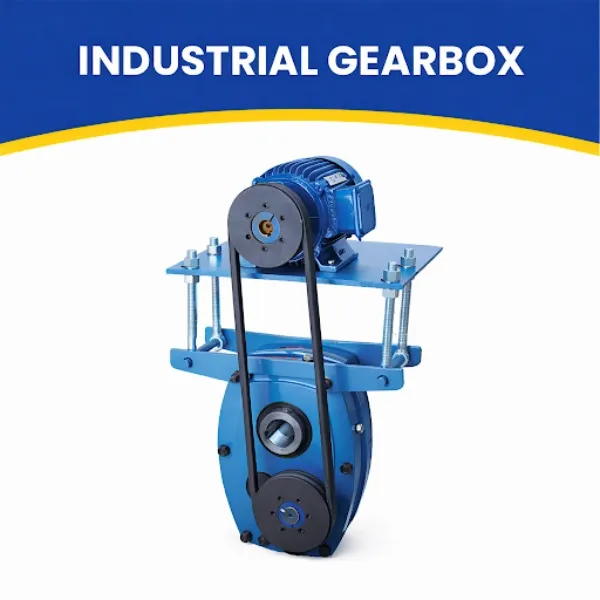
Gears are fundamental mechanical components used to transmit motion and torque between rotating elements. However, selecting an industrial gear involves considerably more than matching diameter or tooth count. Businesses searching for an Industrial Gear Supplier in New Delhi should understand the operating conditions that determine whether a gear is suitable for a particular machine.
This knowledge is useful for OEMs, maintenance teams, machinery manufacturers, and industrial plants throughout Delhi that regularly procure replacement or production components.
Start With the Actual Application
A gear should be selected according to the machine rather than treated as an isolated component.
Before sourcing, identify:
- Input speed
- Output speed
- Required torque
- Direction of rotation
- Operating hours
- Expected load variation
- Available installation space
- Environmental conditions
These factors help determine the appropriate gear type, dimensions, material, and manufacturing requirements.
Understand Different Gear Configurations
Different tooth arrangements serve different mechanical purposes.
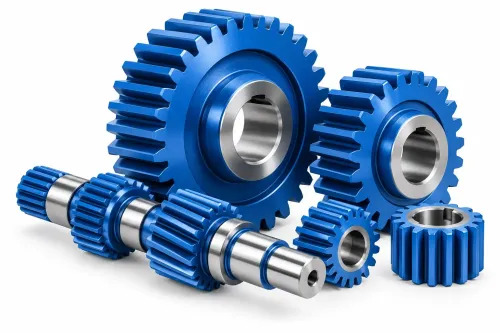
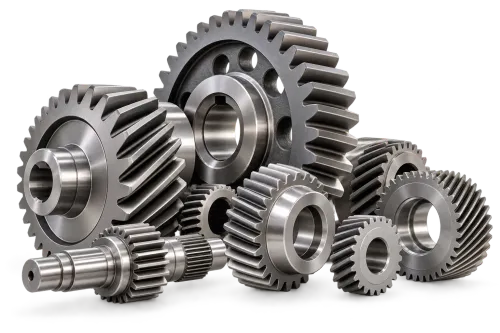
Spur gears are commonly used where parallel shafts and straightforward power transmission are required.
Helical gears have angled teeth that engage progressively, supporting smoother operation in many industrial applications.
Bevel gears can transmit power between intersecting shafts and are useful when drive direction needs to change.
Other configurations may be selected according to specialised machinery requirements.
There is no universally suitable gear type. Selection depends on the mechanical arrangement and operating conditions.
Consider the Load Profile
Two machines with similar motor ratings can place very different demands on their gears.
A continuously running machine with a relatively stable load differs from equipment exposed to frequent starts, stops, shocks, or sudden changes in torque.
Buyers should therefore communicate whether the application experiences:
- Uniform loads
- Moderate shock
- Heavy shock
- Frequent reversals
- Continuous duty
- Intermittent duty
Accurate load information helps avoid selecting components based only on nominal operating conditions.
Check Material Requirements
Gear materials influence strength, wear resistance, machinability, and durability.
The appropriate material depends on factors such as transmitted torque, operating speed, required hardness, environmental exposure, and expected service life.
In demanding applications, material selection may need to be considered together with heat treatment and surface finishing.
Dimensional Compatibility Is Essential
Replacement gears must fit the existing assembly correctly. Buyers should verify relevant measurements rather than relying solely on visual similarity.
Useful technical information may include:
- Module or diametral pitch
- Number of teeth
- Pressure angle
- Face width
- Bore dimensions
- Keyway details
- Outside diameter
- Hub dimensions
For custom machinery, engineering drawings provide a much clearer basis for manufacturing and quotation.
Evaluate Manufacturing Capability
An industrial gear supplier should be assessed on technical suitability rather than price alone.
Ask whether the provider can work with required drawings, materials, tolerances, heat-treatment specifications, and inspection requirements.
OPTIGEAR serves industrial power transmission requirements from New Delhi, supporting businesses that need gears and related engineered components for machinery applications.
Keep Maintenance Requirements in Mind
The best component selection can still perform poorly if lubrication, alignment, or installation practices are inadequate.
Once gears enter service, maintenance teams should watch for unusual noise, temperature increases, vibration, lubricant contamination, and changes in tooth contact.
These signs can provide early warning of developing mechanical problems.
Choosing an industrial gear therefore requires a complete view of the machine. Application conditions, geometry, material, manufacturing accuracy, installation, and maintenance all influence the eventual performance of the component.
Keywords