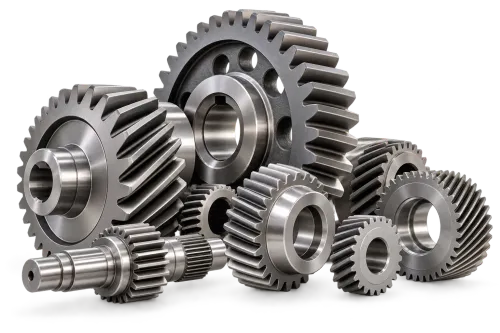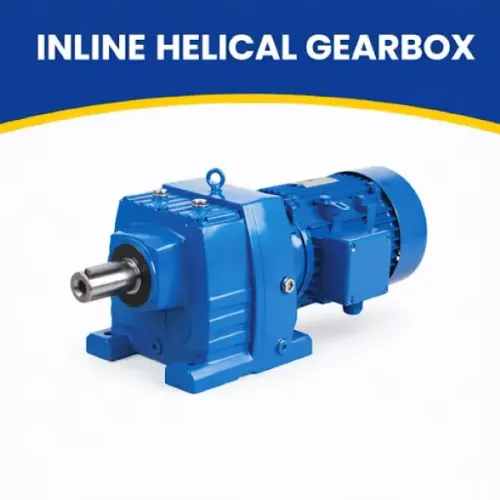
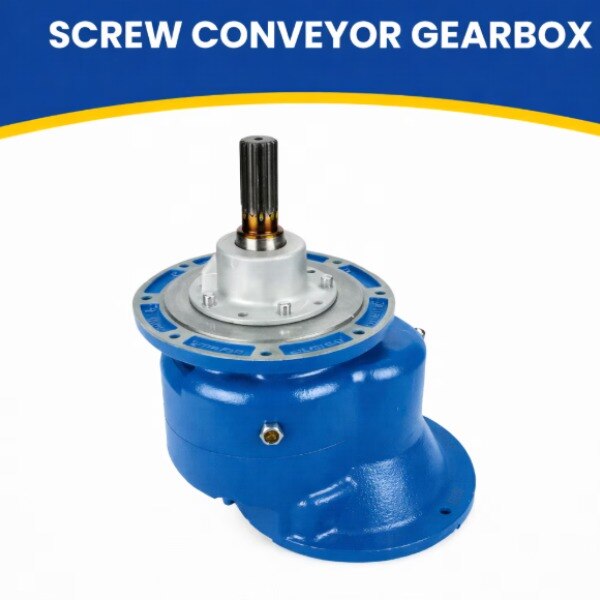
A catalogue gear is inadequate when its geometry, interfaces, load rating, or installation envelope forces a compromise that threatens service life or assembly. By checking failure signals, application data, tooth geometry, materials, and the complete drive arrangement, you can decide whether to adapt a standard gear, commission a custom gear, or specify a complete gearbox.
Key takeaways
- A catalogue gear fails when it cannot meet defined fit, load, speed, or manufacturing limits.
- Check torque, speed, duty cycle, shock loading, lubrication, temperature, and alignment before specifying a gear.
- Change tooth geometry only when analysis proves it solves the limiting condition.
- Choose a custom gearbox when the required ratio, packaging, shafts, or loads exceed one gear pair.
What proves that a catalogue gear is no longer adequate?
A catalogue gear is no longer adequate when adapting it breaks a defined fit, load, operating, or manufacturing limit. A missing bore, face width, or ratio alone proves nothing: tooth count, module or diametral pitch, pressure angle, helix angle, profile shift, face width, bore, keyway, and hub can often be changed.
The custom gear decision turns on the consequence of that change.
- Choose custom design for an incorrect centre distance, nonstandard shaft interface, unusual gear ratio, insufficient torque capacity, tooth interference, repeated tooth breakage, or an installation envelope with no room for a standard hub or housing.
- Reject an adaptation if it reduces tooth-root strength, flank contact strength, interference clearance, backlash control, or production feasibility.
- Investigate abnormal gear noise before changing tooth form. Transmission error, runout, bearing deflection, housing resonance, and poor alignment can create noise that a new module will not cure.
| Option | Practical test | Decision |
|---|---|---|
| Catalogue gear | Fits the shaft and housing, meets torque, and preserves contact and backlash after minor changes | Use it |
| Adapted standard involute gear | A revised profile shift, width, bore, or hub solves the interface without weakening the teeth or creating tooth interference | Validate by calculation and inspection |
| Custom gear | The required centre distance, ratio, load, interface, noise target, or envelope cannot be met without compromising strength or manufacturability | Specify the custom gear |
A custom gear earns its cost by resolving a measured failure or interface constraint, not by matching a preferred dimension.
Which operating data determines whether the gear will survive?
Nominal power, torque, and ratio cannot predict gear life. Give the designer the operating history and the interfaces that transmit the load:
- Supply transmitted torque, minimum and maximum speed, speed range, duty cycle, start-stop frequency, reversing frequency, shock loading, driven inertia, operating temperature, lubricant type and viscosity, and rotation direction.
- Provide the gear ratio, centre distance, shaft diameter, keyway or spline dimensions, available envelope, and mounting constraints. State whether the load is continuous, reciprocating, intermittent, or cyclic.
- Identify application factors for overload and shock, dynamic effects, load distribution across the face width, and the actual duty cycle. A high-inertia start or reciprocating load can require a substantially larger gear than a continuously loaded motor at the same nominal power.
ISO 6336 and AGMA rate these separate failure modes:
| Failure mode | What to check | What can go wrong |
|---|---|---|
| Tooth-root bending fatigue | Root stress through each duty cycle | Tooth fracture despite adequate flank strength |
| Flank contact fatigue | Contact stress, lubrication, and sliding | Pitting despite adequate tooth-root strength |
Check the shaft, key or spline, bearings, seals, and housing with the gears. A gear can pass stress calculations while shaft torsional deflection, shaft deflection, bearing clearance, fretting, keyway stress concentration, or housing distortion destroys the assembly.
Reducing pinion tooth count also requires an undercut check. A standard 20-degree full-depth spur pinion commonly uses at least 17 teeth without profile shift; fewer teeth can weaken the root and reduce contact quality.
Should you customise the gear, change the tooth geometry, or choose another drive?
Compare the custom gear with the complete transmission, not merely with another gear. A spur gear is simple, efficient, economical, and louder at speed; a helical gear raises contact ratio for smoother, quieter engagement but adds axial thrust, bearing loads, and a required helix angle and direction, especially in reversing drives.
| Option | Strength | Trade-off |
|---|---|---|
| Spur gear | Simple, efficient, economical | More engagement noise at speed |
| Helical gear | Smooth, quiet, higher contact ratio | Axial thrust, bearing load, directional helix |
| Bevel gear | Drives intersecting shafts | More complex alignment and maintenance |
| Worm gear | Compact right-angle reduction, high ratio in one stage | Sliding loss, heat, lower efficiency than many spur or helical arrangements |
| Off-the-shelf gearbox | Shorter lead time and simpler mounting | Fixed ratio, shaft positions, backlash, torque rating, service factor, and envelope |
Choose custom production when a precise centre distance, interface, ratio, noise target, or load rating justifies its extra engineering cost and longer lead time. Specify pressure angle, module or diametral pitch, helix angle, face width, backlash, and contact ratio instead of “heavy duty” teeth.
A wider face width cannot rescue uneven load sharing caused by shaft or bearing deflection.
Use profile shift to reconcile centre distance when possible, distributing it between pinion and gear. Excessive shift on one member can thin the tooth tip or worsen contact.
If those compromises remain unacceptable, compare a complete custom gearbox: its higher cost and maintenance burden may still beat a gear-only change that leaves the housing, bearings, lubrication, or mounting unsuitable.
When is the real requirement a complete custom gearbox?
Specify a complete custom gearbox when changing one gear cannot make the surrounding assembly meet its load, alignment, or installation limits. Choose gear replacement only when the gearbox housing, shafts, bearings, seals, lubrication system, centre distance, and mounting pattern already support the revised gear pair.
Escalate to a gearbox design when:
- The new ratio changes shaft speeds or torque reactions.
- Helical thrust exceeds the bearing arrangement, especially in a reversing drive.
- The existing housing deflects under radial load, axial load, or reaction load.
- The gear needs different centre distance, shaft spacing, sealing arrangement, or oil volume.
- The revised pair exceeds shaft, bearing, seal, or mounting limits.
A planetary gearbox adds geometric tests beyond tooth strength. Tooth counts must produce compatible centre distances, and equally spaced planets need correct phasing. A ratio that works in a simple pair can be impossible or inefficient in a planetary layout.
The same applies to a compact coaxial transmission, where concentric shafts, carrier clearance, and assembly access constrain the design.
Record these inputs before requesting a custom gearbox:
- Whether the drive reverses and how frequently.
- How the output is mounted.
- Where radial, axial, and reaction loads enter the housing.
- Shaft spacing, envelope, sealing, lubrication, and mounting limits.
OPTIGEAR can be useful when the gear, shaft, and gearbox interfaces need assessment as one power-transmission assembly rather than as isolated catalogue parts.
Related products
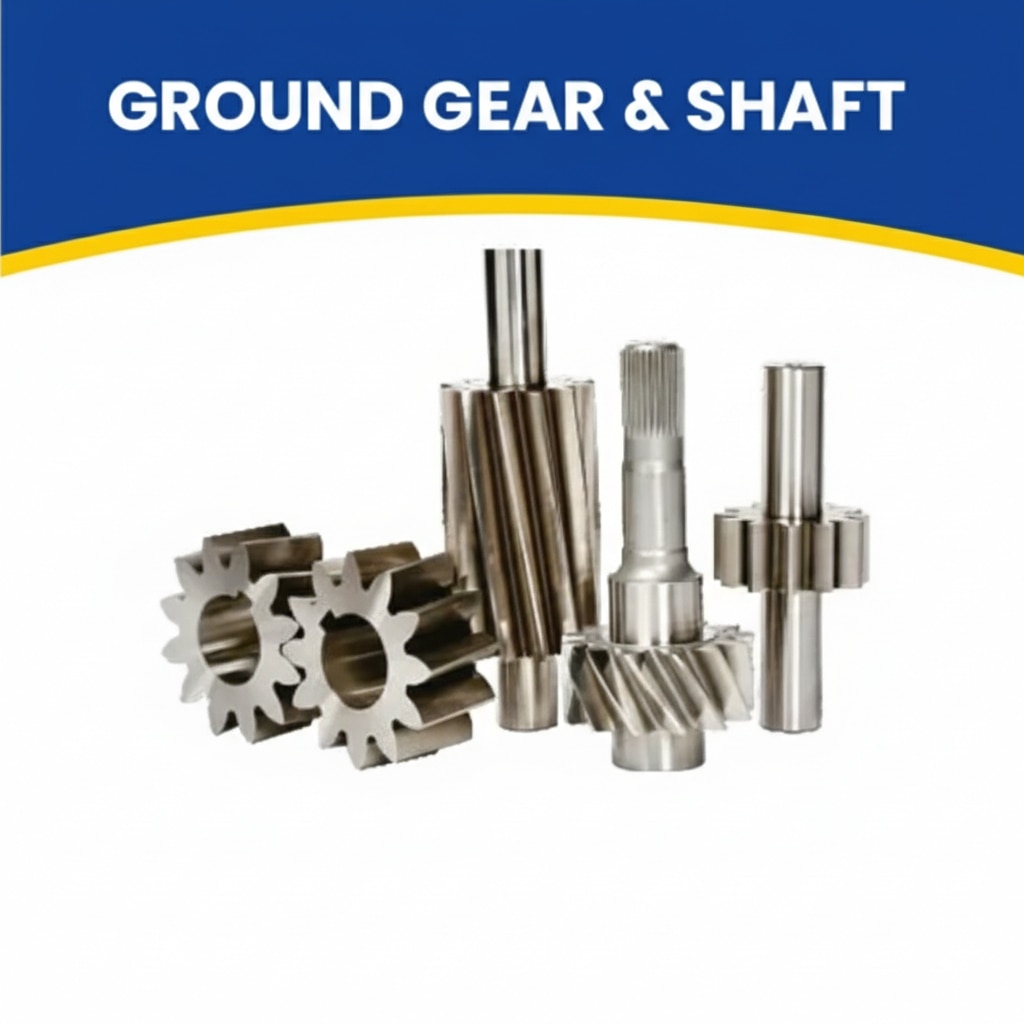 | at JRB Engineering Works JRB Engineering Works is a trusted manufacturer and supplier of high-precision Ground Gears and Shafts, engineered to... View product → |
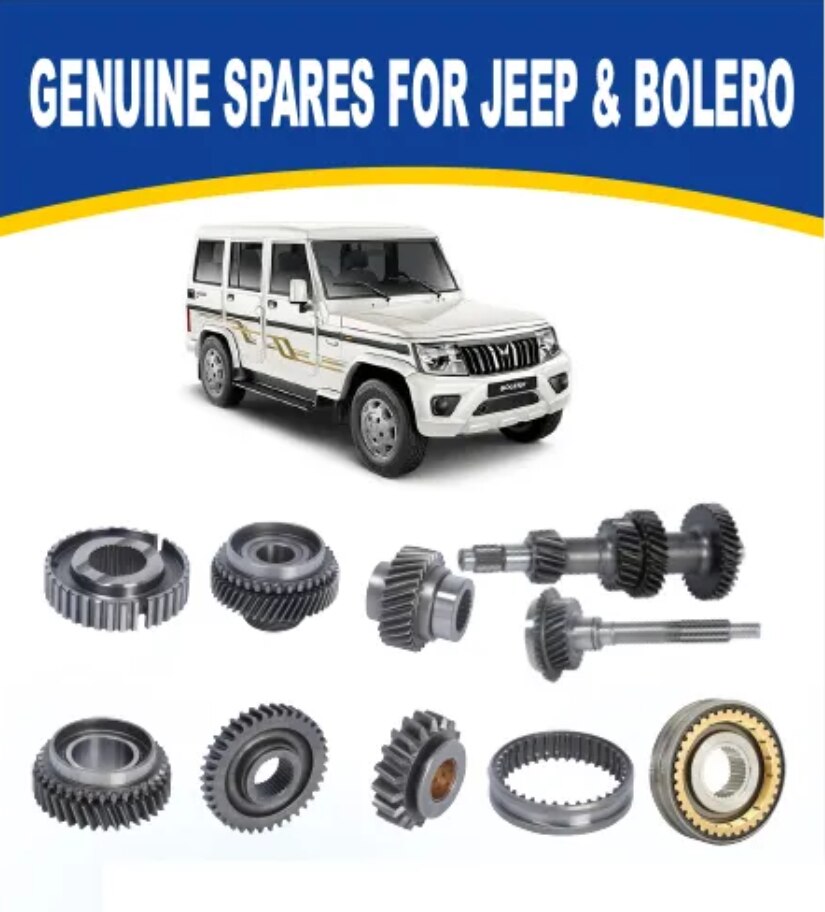 | We have technically qualified and efficient workforce, help us in manufacturing and supplying in Automotive Gears & Shaft. View product → |
Which material, finishing process, and inspection controls justify custom production?
Choose the material and finish against the load, environment, accuracy, and noise target—not the material name alone. Through-hardening gives a tough, consistent section and simpler production. Carburizing and case hardening provide high surface fatigue strength over a softer, tougher core, but heat-treatment distortion can demand tooth grinding.
Nitriding limits distortion and produces a wear-resistant finished surface, yet its case depth and load capability do not suit every duty.
Process choice affects both cost and performance:
| Option | What it means | When it applies |
|---|---|---|
| Hobbed gears or milled gears | Economical cutting with moderate accuracy | Moderate speed, noise, and backlash requirements |
| Ground gears | Additional finishing after heat treatment | Low transmission error, controlled backlash, fine surface finish, high speed, or low noise |
| Nitrided gears | Low-distortion, wear-resistant surface | Tight dimensional control where the required case depth and load are suitable |
Grinding cannot correct shaft misalignment, housing distortion, or uneven load distribution. Specify an inspection drawing that records:
- Profile quality and helix quality
- Runout and bore-to-tooth concentricity
- Tooth thickness or backlash
- Flank hardness and case depth
- Datum relationships to mounting features
Request the inspection records with the gear. A part matching module, tooth count, and material can still generate noise, poor load sharing, or short service life because transmission error, runout, or incorrect datums went unchecked. Custom production earns its cost when these controls protect a measurable operating requirement.
Frequently asked questions
What proves that a catalogue gear is no longer adequate?
A catalogue gear is inadequate when adapting it violates a defined bore, tooth geometry, load, speed, packaging, operating, or manufacturing limit. A missing bore or face width alone does not prove that custom production is necessary.
Which operating data determines whether a gear will survive?
Provide transmitted torque, rotational speed, duty cycle, starts and stops, shock loads, lubrication, temperature, alignment, backlash, and required service life. These values determine tooth bending, contact stress, wear, and thermal demands.
Should you customise the gear, change tooth geometry, or choose another drive?
Customise the gear when the drive principle remains suitable but the fit, capacity, ratio, or interface is unavailable. Change tooth geometry after checking its effect on strength, noise, contact ratio, and manufacturability. Choose another drive when the required speed, torque, efficiency, or layout cannot be achieved reliably with gears.
When is the real requirement a complete custom gearbox?
Specify a complete custom gearbox when the application requires a non-standard reduction ratio, shaft arrangement, housing, mounting pattern, lubrication system, thermal capacity, or coordinated load path that one gear pair cannot provide.
Which material, finishing process, and inspection controls justify custom production?
Use custom production when the duty requires a defined steel grade, heat treatment, case depth, hardness, grinding or honing process, surface finish, runout, profile accuracy, or documented inspection results that catalogue parts cannot provide.
Related product
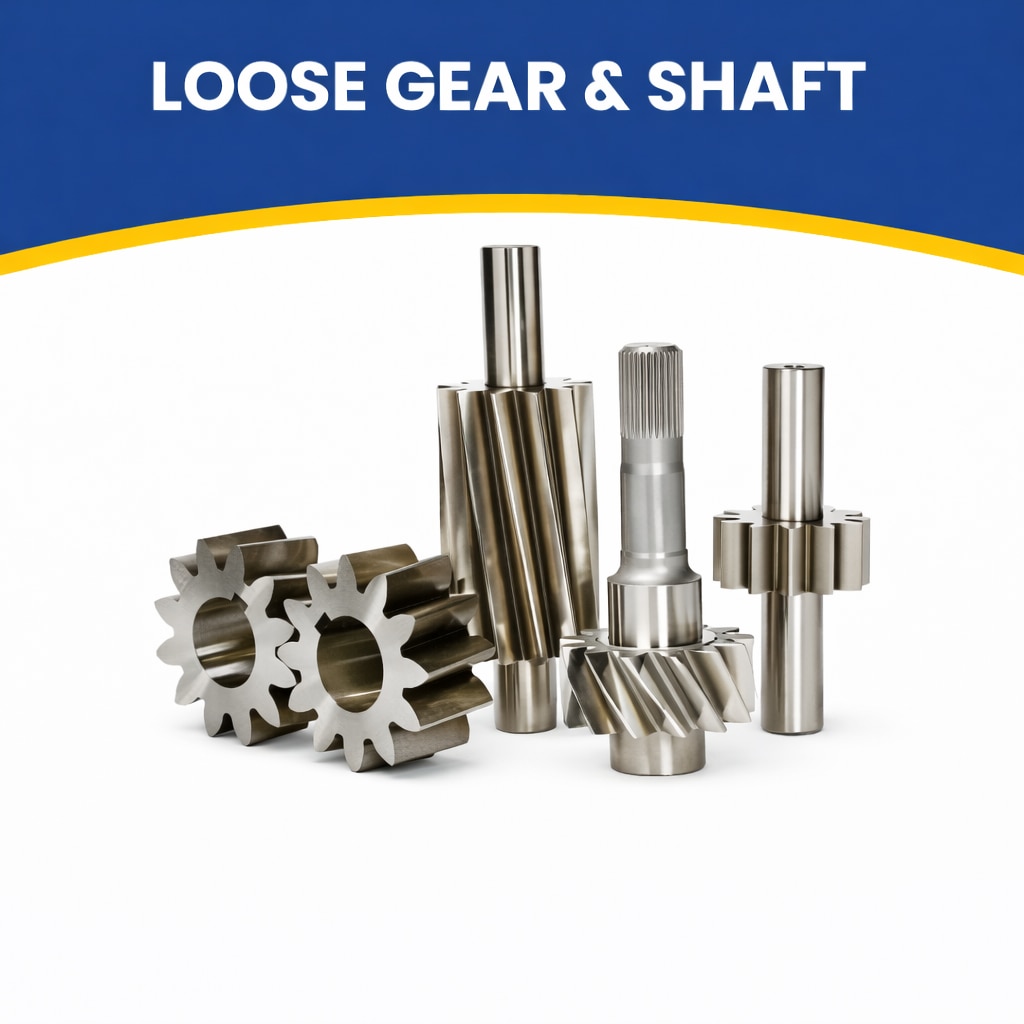 | Precision Components by JRB Engineering Works JRB Engineering Works is a trusted manufacturer and supplier of Loose Gears & Shafts, engineered to... View product → |