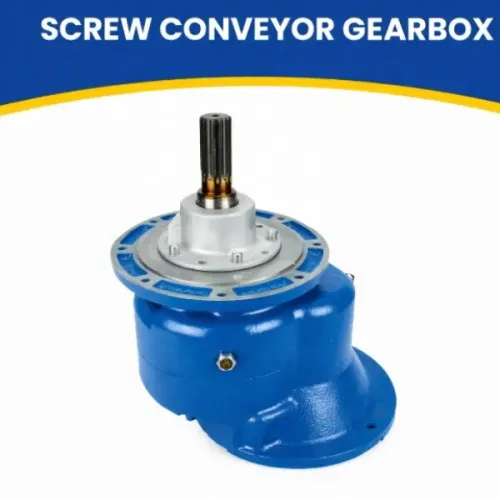
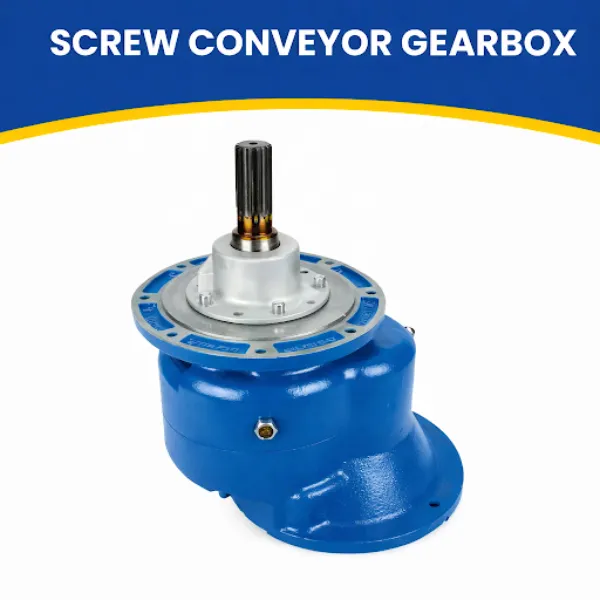
Screw conveyors are widely used to move powders, granules, bulk solids, and processed materials. Their relatively simple construction can make them appear easy to drive, yet the gearbox may experience substantial torque, particularly during startup or when material compacts inside the conveyor.
Businesses evaluating a Screw Conveyor Gearbox Supplier in New Delhi should therefore examine the complete operating requirement before selecting a drive.
Understand the Material Being Conveyed
The characteristics of the conveyed material directly influence the load placed on the screw.
Important factors include:
- Bulk density
- Moisture content
- Particle size
- Material consistency
- Abrasiveness
- Tendency to compact
- Conveyor filling level
A screw conveyor handling a light, free-flowing material does not impose the same mechanical demand as one moving dense or sticky material.
Startup Torque Can Be Critical
A conveyor may operate comfortably once material is moving but require significantly greater torque during startup.
This becomes particularly important when the machine can restart while partially or fully loaded.
Selecting a gearbox using only normal running conditions may therefore underestimate the actual requirement.
Match Speed to the Process
Screw speed affects conveying capacity, material behaviour, and equipment wear.
The gearbox ratio needs to convert motor speed to the required screw speed without forcing other parts of the system to operate outside their intended range.
OEMs should establish the target output speed before finalising the gearbox.
Consider Continuous Duty
Many process plants operate screw conveyors for extended periods.
Continuous service can increase thermal demands on the gearbox and makes lubrication, bearing condition, and load characteristics especially important.
For long-duty applications, buyers should provide realistic operating hours instead of assuming intermittent service.
Check Installation Space
Gearbox selection is also influenced by the physical machine layout.
Review:
- Input shaft arrangement
- Output shaft position
- Available clearance
- Mounting orientation
- Motor connection
- Maintenance access
A technically capable gearbox that cannot be installed or serviced conveniently may create unnecessary complications.
Watch for Common Selection Mistakes
Several problems can be avoided during procurement.
Do not:
- Select only according to motor horsepower
- Ignore loaded startup conditions
- Estimate output speed without checking the ratio
- Assume every bulk material creates similar loads
- Overlook shaft dimensions
- Neglect lubrication access
- Ignore shock loading
A detailed application discussion before purchase is considerably easier than modifying an unsuitable drive after installation.
Think Beyond Initial Purchase Price
For industrial operations, the cost of a gearbox includes more than the invoice amount.
Downtime, maintenance requirements, replacement availability, energy use, and service life can all affect the overall economics of the drive system.
A slightly different gearbox configuration may provide better operational value when these factors are considered together.
OPTIGEAR supplies industrial gearbox and power transmission solutions from New Delhi for machinery and material handling requirements. Providing accurate operating information enables a supplier to evaluate the application more effectively.
The right screw conveyor gearbox is ultimately the one matched to material characteristics, required speed, startup torque, duty cycle, and installation arrangement. Treating these factors as part of one engineering decision can improve reliability throughout the conveyor system.
Keywords