“OT Series” does not identify a universal shaft standard. Before ordering, you need the exact manufacturer drawing, the gearbox interface data, and measured evidence that the shaft, bore, key, loads, seals, and mounting arrangement will work together. These checks let you approve a compatible assembly instead of relying on a matching nominal diameter.
Key takeaways
- Confirm the exact OT model, part number, manufacturer, and drawing revision.
- Match shaft diameter, bore, keyway, insertion length, and retention method.
- Calculate torque and radial loads before approving a gearbox.
- Record mounting, speed, duty cycle, materials, seals, and environment in the purchase specification.
Identify the OT Variant Before Comparing Gearboxes
The letters OT do not identify a shaft by themselves. Confirm the manufacturer, exact OT model, ratio, output configuration, part number, and drawing revision before comparing gearboxes. Treat round shaft OT series requirements as a document-control question, not a diameter question.
Request these records before approval:
- The manufacturer’s OT series drawing and dimensional table, including shaft outside diameter, usable extension, shoulder locations, keyway width and depth, centre height, pilot, mounting holes, and threaded holes.
- The part-number convention and the quotation or purchase order showing the exact variant, revision, material, and any suffix for shaft or output configuration.
- A final inspection report tied to the serial or batch number, recording actual diameter, keyway dimensions, shaft extension, concentricity or runout, and hardness when specified.
| Document | Confirms | Limitation |
|---|---|---|
| Series drawing | Nominal interface and variant differences | Does not prove the delivered shaft matches |
| Quotation or purchase order | What you ordered | Cannot replace dimensional evidence |
| Inspection report | Actual measured features and traceability | Must identify the shaft by serial or batch |
Compare those records with the gearbox catalogue drawing, nameplate, and measured hollow bore. A “standard round shaft” description is inadequate: it does not establish bore tolerance, insertion length, retaining method, seal-running surface, or permissible misalignment. Stop the comparison if the drawing revision or variant cannot be tied to the delivered part.
Match the Shaft, Bore, Keyway, and Insertion Length
A round shaft enters and seats correctly only when its outside diameter, bore fit, key interface, insertion length, and surrounding clearances match the gearbox drawing. Shaft diameter alone cannot establish round shaft gearbox compatibility; a few tenths of a millimetre can determine whether the shaft binds, rattles, or fails to seat.
| Dimension to compare | What to verify | Failure if mismatched |
|---|---|---|
| Shaft diameter and bore | Actual shaft OD, hollow-bore diameter, bore tolerance, and permissible clearance | Binding during assembly or excessive fretting |
| Insertion length and shoulders | Usable shaft extension, shoulder position, bottoming depth, and internal bore depth | The shaft stops short, bottoms out, or loads the gearbox bearing |
| Keyway and key | Keyway width, depth, length, position, corner form, and matching key size | Torque passes through one edge, causing key or hub damage |
| Seal and housing clearance | Seal-running diameter and finish, runout, burrs, and clearance around the housing | A keyway edge or eccentric surface cuts the seal lip |
Use the OT series shaft requirements from the manufacturer’s dimensional drawing, not the letters “OT” alone. Compare the exact shaft drawing with the gearbox catalogue drawing or a measured bore.
- Confirm the shaft OD and tolerance against the gearbox bore.
- Check that the keyway starts at the correct axial position and accepts the specified key without rocking.
- Measure insertion length from the reference shoulder to the shaft end; do not count an unusable threaded or chamfered section.
- Confirm the retaining method, pilot or shoulder fit, seal land, and housing clearance before applying force. A shaft that needs hammering is not a compatible fit.
Verify Torque, Loads, Retention, and Seal Clearance
A nominally matching keyway proves nothing until the connection’s torque capacity exceeds the gearbox demand. For round shaft gearbox compatibility, compare the gearbox rated output torque, application service factor, peak or starting torque, and shaft-key-hub capacity; the lowest value governs.
Verify the connection in this order:
- Calculate design torque as rated output torque multiplied by the application service factor, then check it against peak and starting torque.
- Confirm the key’s shear and bearing capacity, hub wall strength, and shaft torsional capacity. A loose fit can cause fretting and rapid keyway damage.
- Check overhung load at the gearbox shaft shoulder, using the pulley, sprocket, or coupling’s actual distance from the bearing. The same radial force creates a larger bending moment farther out.
- Check axial load, permissible misalignment, and the manufacturer’s shaft deflection limits.
- Specify shaft and hub tolerances under ISO 286. A 30 mm nominal shaft can need a clearance, transition, or interference fit; choosing the wrong fit causes assembly damage or slip.
Do not use the key as the sole axial retainer. The drawing must show a shoulder, end plate, circlip, or clamping arrangement, plus enough insertion length to prevent the hub from bottoming on the housing, shoulder, or seal.
If the shaft runs through an oil seal, inspect the seal-running diameter, surface finish, runout, burrs, and keyway edges. Any defect can cut the lip or create leakage even when torque transmission passes.
Check Mounting, Speed, Duty, Materials, and Environment
A shaft can fit the gearbox bore and still fail in service because the gearbox cannot reject heat, carry the external load, or tolerate the operating cycle. The round shaft OT series requirements therefore include conditions beyond diameter, keyway, and insertion length.
- Confirm the mounting arrangement, centre height, pilot, flange or foot pattern, and installation orientation. A gearbox mounted vertically instead of horizontally can alter lubricant coverage and bearing loading.
- State rotation direction, input and output speed, starts per hour, braking, reversing, duty cycle, and shock loading. Matching ratios do not guarantee matching service factors or peak-torque capacity.
- Calculate the driven component’s overhung load at the gearbox shaft shoulder, including the pulley, sprocket, or coupling position. Moving the load farther from the bearing increases bending moment and can make the gearbox unsuitable.
- Check the thermal rating at the actual ambient temperature, enclosure, lubricant, speed, and duty. A New Delhi installation can exceed the nominal catalogue condition if heat rejection is restricted.
- Match shaft material and hardness with the hub, key, lubricant, seal material, humidity, dust, chemicals, and temperature. Corrosion or fretting can destroy an otherwise correct fit.
Request the manufacturer’s rating for your complete duty, not only the nominal output dimensions. Reject the selection if rated torque, peak torque, shaft-key-hub capacity, thermal limit, or allowable radial load falls below the application requirement; the weakest value governs.
Use a Purchase Specification That Supports Interchangeability
Approve the order only after the supplier converts “standard round shaft” into a traceable, inspectable specification. Ask a round shaft supplier in new delhi for the following documents and confirmations:
1. A manufacturer’s OT Series drawing, dimensional table, and part-number key identifying the exact variant. Require actual outside diameter, tolerance, usable shaft extension, shoulder locations, keyway width, depth and length, keyway position, centre height, pilot diameter, threaded-hole size, and mounting-hole pattern.
2. An inspection report for the supplied batch showing measured diameter, concentricity or runout, seal-running surface condition, material grade, hardness, and model or batch identification. Compare these values with the gearbox hollow-bore diameter, bore tolerance, insertion length, key fit, retaining method, and permissible misalignment.
3. A signed torque and load confirmation covering gearbox rated output torque, application service factor, starting or peak torque, and the shaft-key-hub connection’s torque capacity. Request radial-load and axial-load tables with load distance, speed, shaft extension, direction, and mounting position; the weakest limit governs.
4. A compatibility statement covering thermal rating at your actual ambient temperature, lubricant, speed, duty, enclosure, orientation, foot or flange dimensions, pilot, bolt circle, bolt grade, and IEC mounting code where relevant. OPTIGEAR can use the same checklist when comparing an OT shaft with a gearbox drawing.
A search for round shaft ot series for requirements gearbox compatibility in new delhi is useful only when the supplier returns drawings and measured evidence, not catalogue labels.
Related products
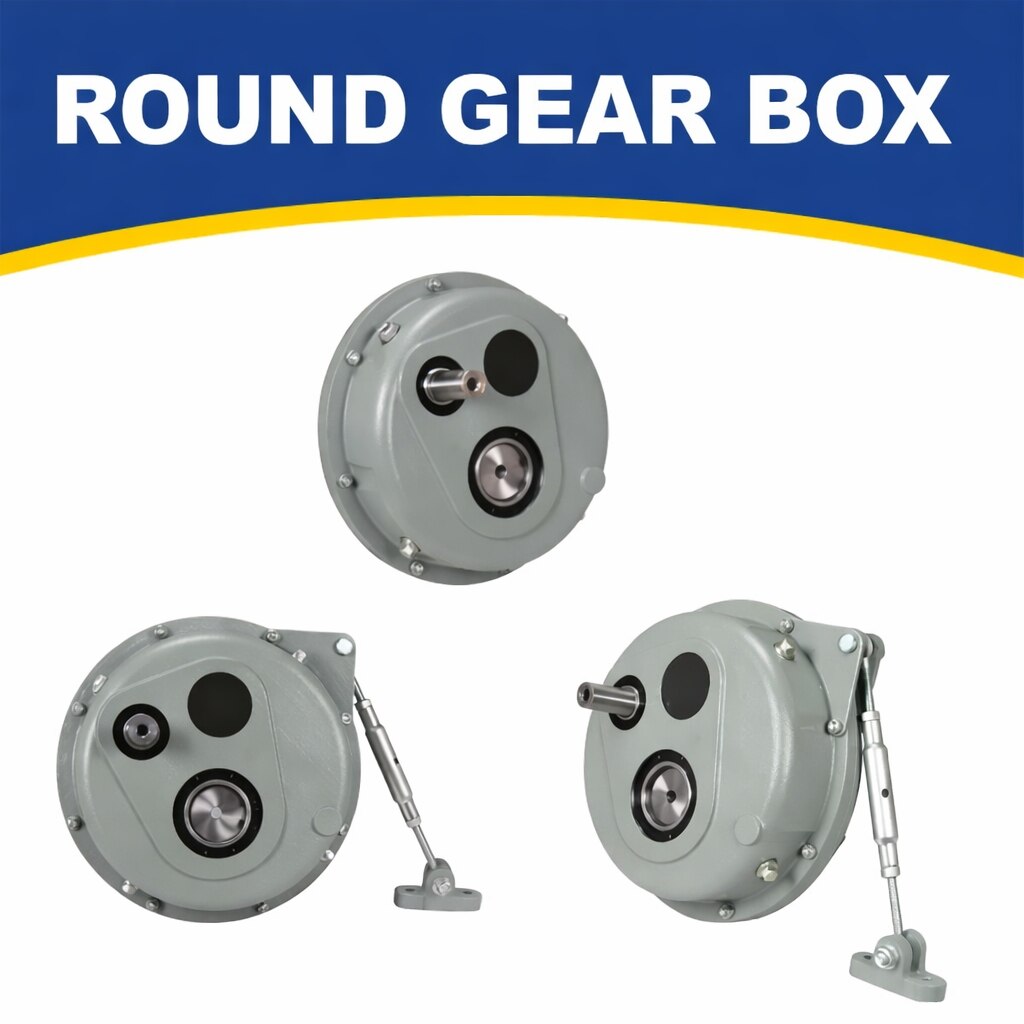 | Round Shaft (OT Series) Manufactured & Supplied by JRB Engineering Works JRB Engineering Works is a reputed manufacturer and supplier of high-quality... View product → |
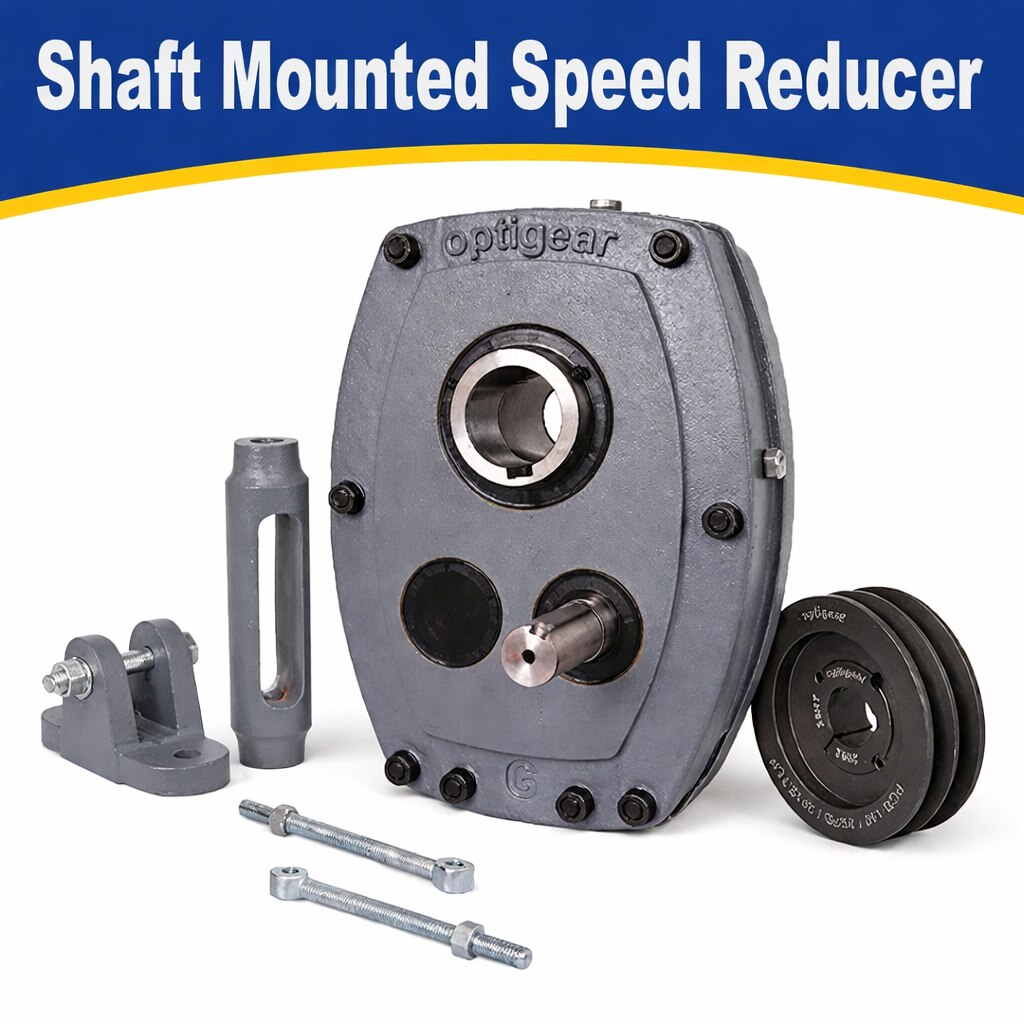 | Manufactured & Supplied by JRB Engineering Works JRB Engineering Works is a trusted manufacturer and supplier of high-performance Shaft Mounted Speed... View product → |
Frequently asked questions
What must you confirm before comparing OT-series gearboxes?
Confirm the manufacturer, exact OT model, ratio, output configuration, part number, and drawing revision. OT alone does not identify a compatible shaft.
Which shaft dimensions control round shaft gearbox compatibility?
Compare shaft diameter, bore, keyway dimensions, insertion length, retention method, and available seal clearance against the gearbox drawing.
How do you verify that a gearbox can handle the shaft application?
Check output torque, radial and axial loads, retention hardware, operating speed, duty cycle, shock loading, and seal clearance.
What should a purchase specification include for interchangeable gearboxes?
Include the exact OT variant, shaft and keyway dimensions, torque and load ratings, mounting pattern, speed, duty, materials, environment, seals, and drawing revision.
Keywords