A motor’s kW rating does not tell a supplier whether a gearbox will survive the machine’s starting torque, external shaft loads, speed range, heat, or mounting position. By the end, you will have a specification checklist and quotation brief covering calculations, interfaces, environment, safeguards, testing, and the documents to demand before approving an order.
Key takeaways
- Calculate output torque, speed and ratio from the machine duty.
- Apply service factor for shock loads, starts, reversals and operating hours.
- Confirm mounting, shaft dimensions, external loads and backstop requirements.
- Put inspection points, drawings, tests and acceptance criteria in the quotation.
Convert the machine duty into torque, speed, and ratio requirements
Calculate the machine-side duty before requesting a quotation; these are the core industrial gearbox requirements, not optional industrial gearbox order details.
1. Record motor power in kW or HP, input speed in rpm, target output speed, minimum and maximum operating speeds, allowable speed tolerance, hours per day, starts per hour, number of reversals, and the percentage of time spent at each load point.
2. Calculate the reduction ratio as: ratio = input speed ÷ required output speed. A 1,440 rpm motor driving a shaft at 60 rpm needs a nominal 24:1 ratio, subject to the gearbox’s actual rated ratio and operating slip.
3. Calculate gearbox-shaft output torque as: torque in N·m = 9,550 × power in kW ÷ output speed in rpm. A 7.5 kW load at 60 rpm requires about 1,194 N·m before applying service factor or allowing for efficiency losses.
4. Give the supplier a torque schedule showing continuous operation, startup or breakaway, peak load, and every speed point in the variable-frequency-drive range. Include motor starting torque, acceleration time, braking method, and reversal frequency when an inverter is used.
Do not submit only motor horsepower. The quotation needs machine-side speed, torque, ratio, and duty data.
Specify shock, service factor, thermal capacity, and external shaft loads
A gearbox that survives steady running can still fail during a crusher start, conveyor jam, or rapid reversal. Describe the driven machine, shock severity, load classification, operating hours per day, starts and stops, reversing duty, rapid acceleration, and regenerative braking.
Ask the industrial gearbox manufacturer to show how the mechanical service factor was selected from that duty. Reject an unexplained 1.5 or 2.0. State these industrial gearbox manufacturer requirements in the order brief:
- Separate continuous rated torque, peak or breakaway torque, and allowable overhung load; do not treat them as interchangeable.
- Provide conveyor pull, drum or sprocket diameter, belt or chain tension, radial load, axial or thrust load, load direction, bearing distance, and external bending moment.
- Request a bearing-life calculation for combined transmitted torque, radial load, and axial load using ISO 281 rating-life terminology and framework.
- For an inverter-driven motor, provide starting torque, minimum and maximum input rpm, acceleration time, braking method, torsional inertia, and reversal or plugging frequency.
- Ask for a thermal-capacity calculation based on the actual duty cycle, not only a tooth and shaft strength rating.
Mechanical strength and thermal capacity are separate checks. A gearbox can meet its torque rating yet overheat at low output speed, high ambient temperature, frequent starts, or continuous operation. The thermal calculation must use the load percentage at each operating point and account for braking heat.
Lock down mounting, shaft interfaces, and load-holding functions
An industrial gearbox order details sheet must identify the mounting arrangement, position, and approved mounting code—not merely the gearbox model. State the shaft position, mounting dimensions, baseplate hole pattern, available clearance, and exact orientation.
| Mounting option | Physical arrangement | Specify before ordering |
|---|---|---|
| Foot | Housing sits on feet | Foot-hole pattern and baseplate dimensions |
| Flange | Housing bolts to the machine | Flange type, pilot diameter, and bolt circle |
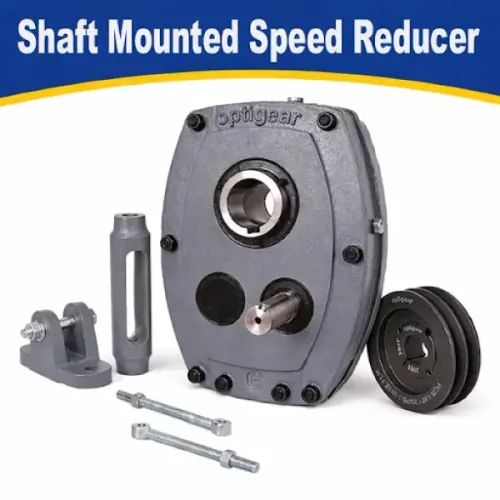
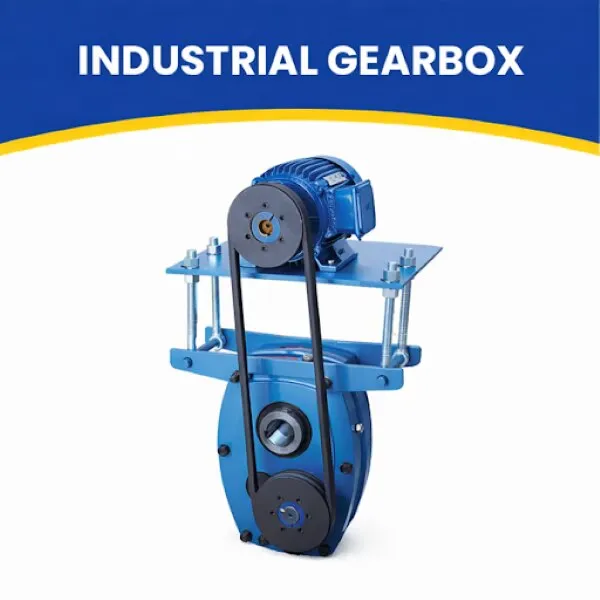
| Shaft-mounted | Gearbox hangs on the driven shaft | Hollow-shaft bore, support arrangement, and shaft length |
| Torque-arm | Reaction torque transfers through an arm | Arm location, travel, and restraint clearance |
Choose horizontal, vertical shaft-up, or vertical shaft-down installation. Orientation changes oil level, breather location, seals, bearing lubrication, and allowable torque, so request the approved mounting code, oil fill quantity, and installation drawing for that exact position.
Include these industrial gearbox order details:
- IEC or NEMA motor frame, flange type, input shaft diameter and key, output shaft diameter or hollow-shaft bore, keyway dimensions, shaft extension, and the keyed or shrink-disc connection.
- Coupling, pulley, belt, chain, sprocket, or gear details, plus allowable coupling misalignment and shaft-load direction.
State rotation direction and whether the machine needs a brake, backstop, torque limiter, or separate holding device. A reduction gearbox is not a safety brake for a suspended or overrunning load.
Specify whether the load must stop quickly, resist reverse rotation, permit backdriving, or remain held during power loss; “compatible with a standard motor” is not enough.
Choose the gearbox arrangement and site protection around the application
Compare the arrangement with the machine’s geometry, load behaviour, and safety needs—not the product name.
| Arrangement | Main advantage | Check before ordering |
|---|---|---|
| Inline helical | Coaxial input and output | Confirm the shafts can align |
| Parallel-shaft | Shorter shaft-centre distance | Check width, overhung load, and service access |
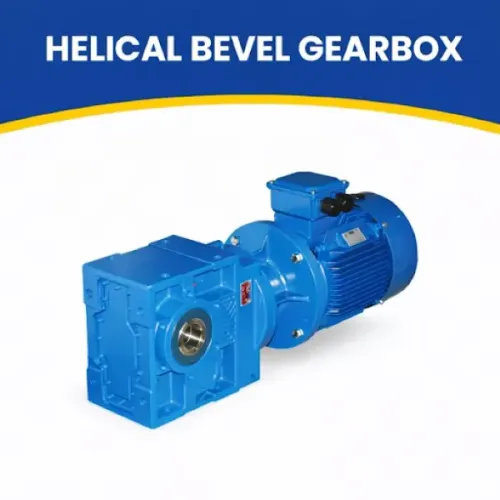
| Helical-bevel | Right-angle drive in restricted space | Confirm rotation, mounting orientation, and efficiency |
| Worm | Compact, high reduction | Allow for heat, lower efficiency, backlash, and possible backdriving |
Request efficiency, backlash, thermal output, maintenance access, and torque density at your actual operating point. For an industrial gearbox, requirements before ordering in New Delhi should include the following:
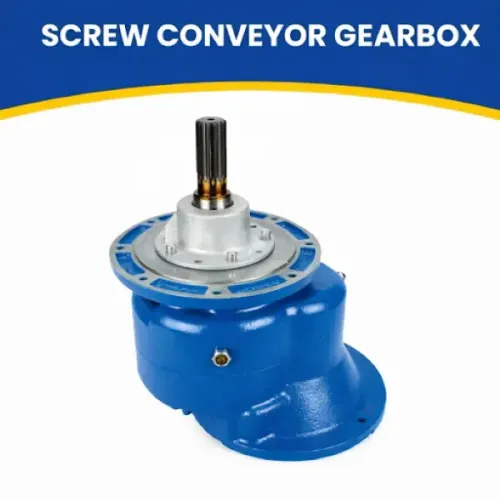
- Screw conveyors: sticky or packed-start torque, thrust direction, shaft loading, and backstop need.
- Mixers, crushers, and feeders: peak torque, shock, reversing duty, and starts per hour.
- Belt conveyors and lifts: brake, backstop, suspended-load holding, and stopping time.
Give the supplier measured minimum and maximum ambient temperature, humidity, dust, water jets, washdown practice, chemicals, altitude, solar exposure, and indoor or outdoor location. For New Delhi, state actual site extremes rather than “Delhi temperature”; heat, dust, monsoon moisture, and sun affect thermal capacity and protection.
Specify lubricant type, ISO viscosity grade, mineral or synthetic base, food-grade status, seal compatibility, breather protection, initial fill, and oil-change interval. For hazardous areas, provide zone, gas or dust group, temperature class or maximum surface temperature, and ATEX or other conformity requirements. An IP rating alone does not establish explosive-atmosphere suitability or chemical resistance.
Turn the specification into a quotation, inspection, and acceptance checklist
Send one consolidated industrial gearbox order brief, not separate emails, with the calculated ratio, output rpm, continuous and peak torque, service factor, thermal duty, speed range, motor and drive data, external loads, mounting position, interfaces, rotation, brake or backstop needs, lubricant, ambient conditions, and required delivery documents.
These are core industrial gearbox manufacturer requirements and usable industrial gearbox order details.
Require the supplier to return:
- A dimensioned drawing showing mounting holes, shaft heights and extensions, clearances, oil level, breather, drain, and inspection points.
- The selected rating, actual service factor, thermal capacity, bearing-life basis, efficiency, backlash, noise and vibration limits, approved mounting code, oil-fill quantity, and complete nameplate data.
- Material or heat-treatment records where specified, lubrication records, and the proposed no-load or load-test procedure.
| Check before purchase | Evidence to require | Acceptance decision |
|---|---|---|
| Ratio, speed, and rotation | Calculated ratio, output rpm, rotation confirmation | Reject a mismatch |
| Strength and heat | Service-factor calculation, thermal-capacity calculation, bearing-life basis | Approve only for the stated duty |
| Fit and installation | Drawing, dimensions, interfaces, clearances, mounting orientation | Reject dimensional conflicts |
| Condition at delivery | Leakage inspection, test results, vibration and noise readings, final inspection record | Release after documented compliance |
State whether acceptance includes dimensional inspection, leakage inspection, no-load or load testing, and final records. ISO 9001 certification shows a quality-management system; it does not prove this gearbox meets your duty. An industrial gearbox supplier in New Delhi, including OPTIGEAR, earns comparison when its quotation answers these machine-specific questions and supplies the required records.
Related products
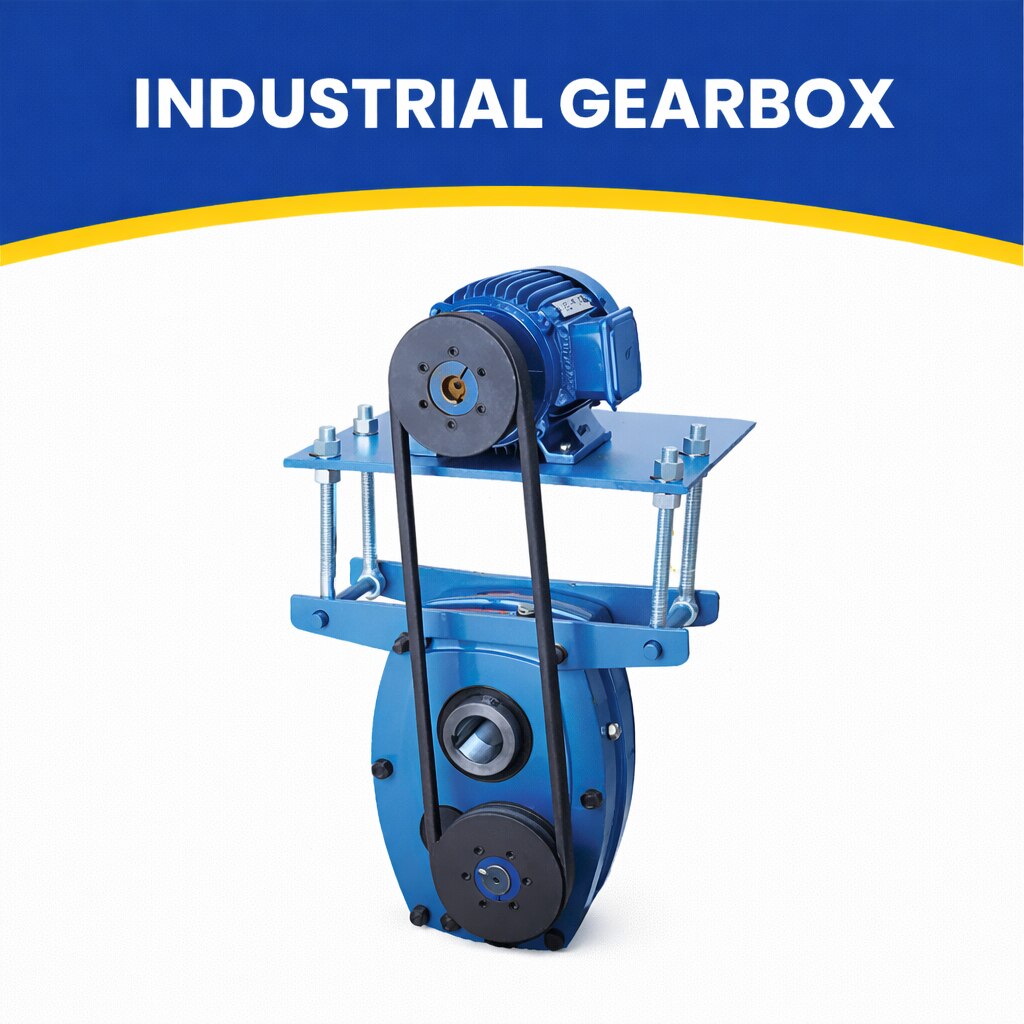 | By JRB Engineering Works JRB Engineering Works is a trusted manufacturer and supplier of high-performance Industrial Gearboxes, engineered to deliver... View product → |
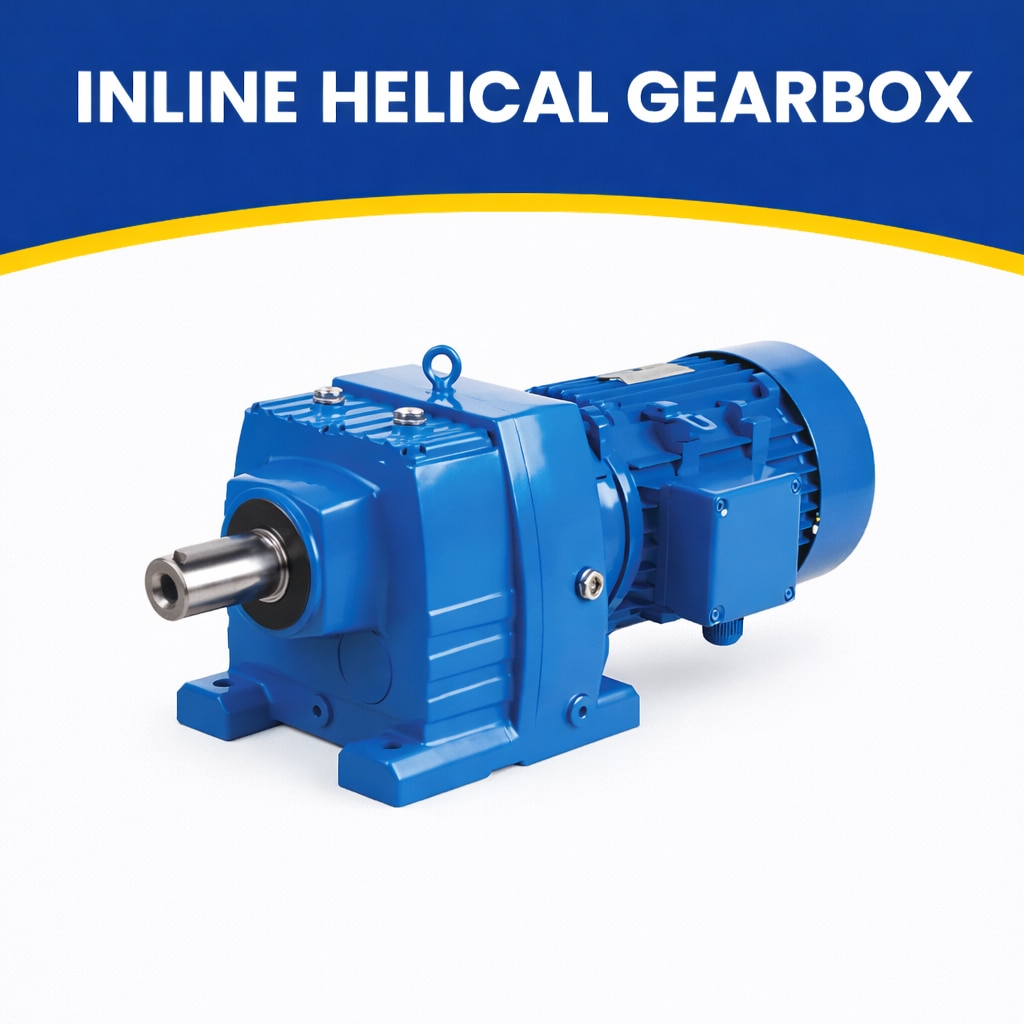 | Efficient & Compact Drive Solutions by JRB Engineering Works JRB Engineering Works manufactures high-quality Inline Helical Gearboxes designed for... View product → |
Frequently asked questions
How do you calculate gearbox torque, speed and ratio before ordering?
Define the machine’s required output speed, input speed and reduction ratio, then calculate output torque from power and speed. Check starting torque, peak torque and the duty cycle rather than sizing from running power alone.
What service factor and thermal checks belong in a gearbox specification?
State operating hours, starts per hour, reversals, shock loads and the required service factor. Compare the gearbox’s rated mechanical torque with its thermal capacity at the actual ambient temperature, speed and duty cycle.
Which mounting and shaft details must you confirm with the supplier?
Provide the mounting orientation, foot or flange dimensions, shaft diameter and length, keyway or shrink-disc interface, rotation direction, and allowable radial and axial shaft loads.
What should a gearbox quotation and acceptance checklist include?
Request a dimensioned drawing, ratio, torque rating, service factor, thermal rating, materials, lubrication, seals, test records, inspection points, delivery scope and acceptance limits for noise, backlash, runout and vibration.
Related products
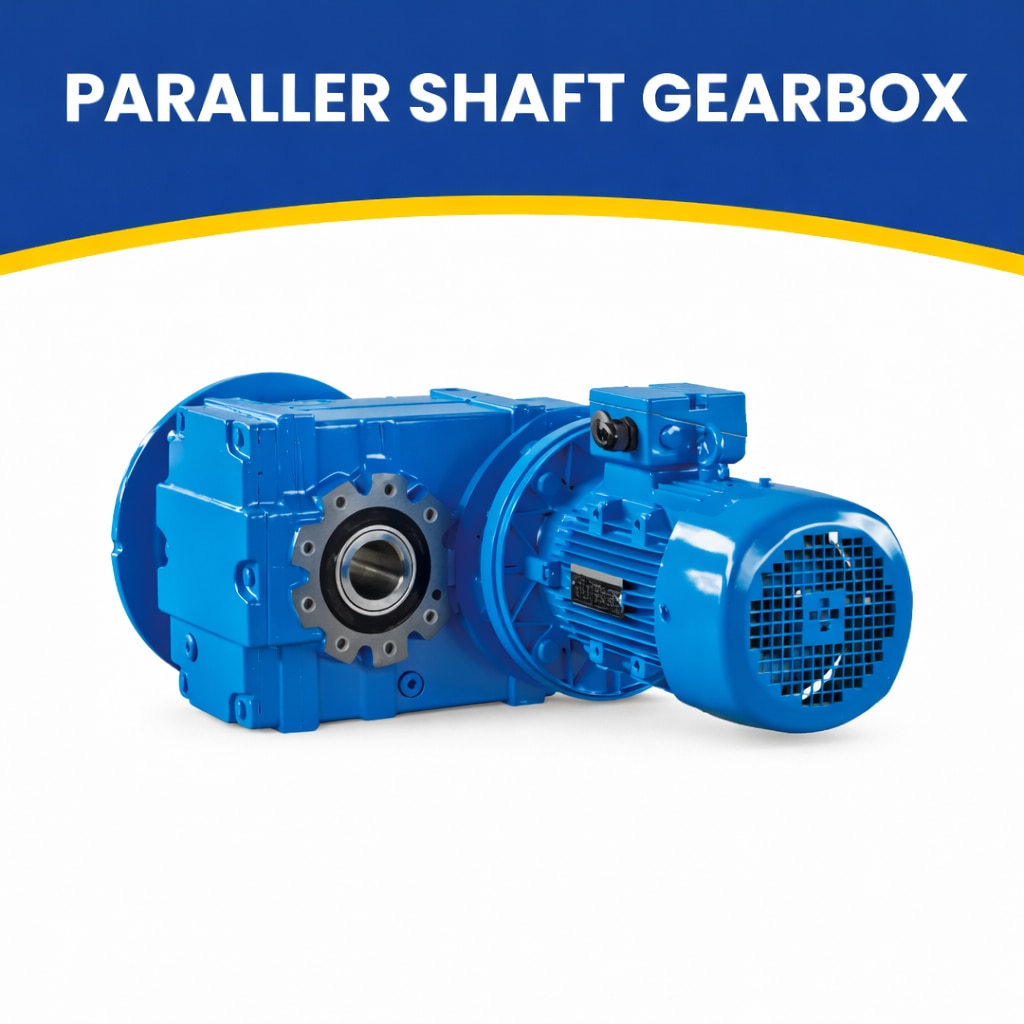 | High-Performance Power Transmission by JRB Engineering Works JRB Engineering Works manufactures and supplies Parallel Shaft Gearboxes designed for... View product → |
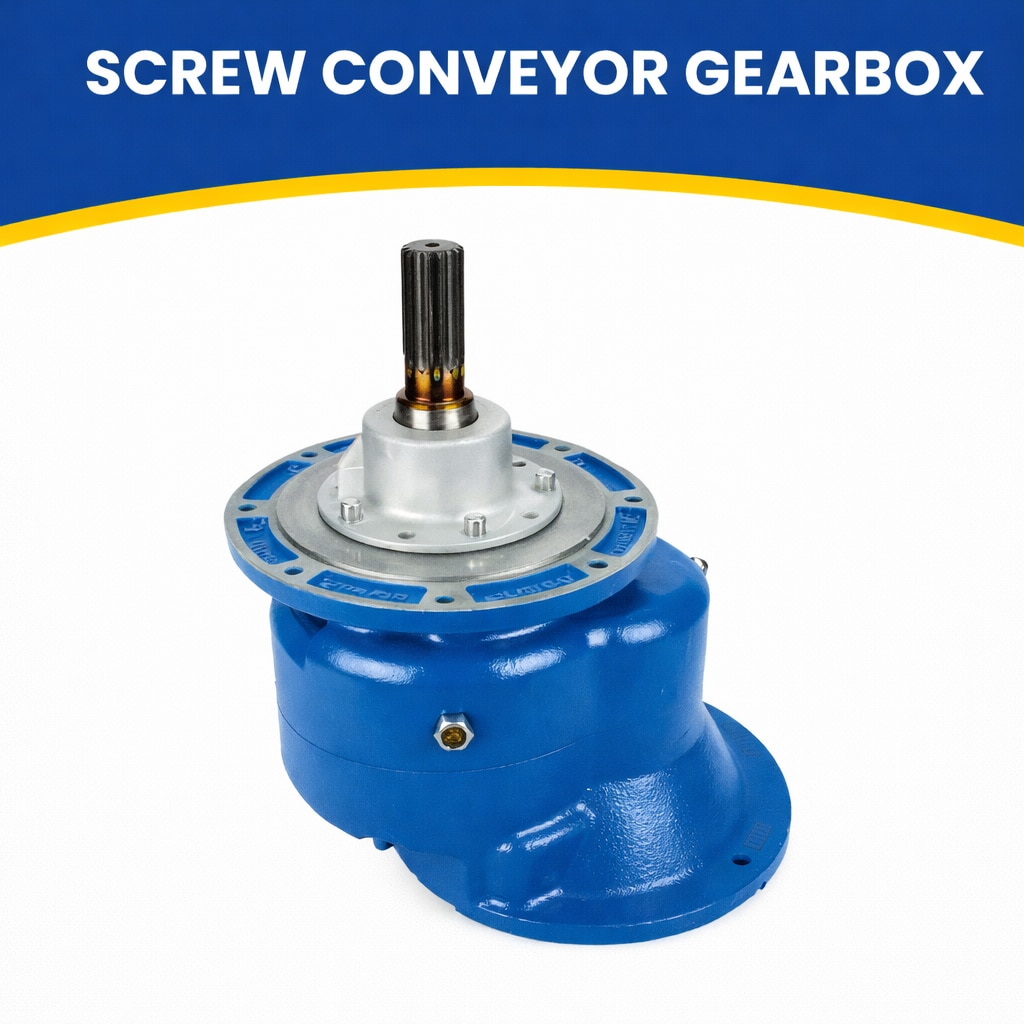 | By JRB Engineering Works Optigears is the world’s top manufacturer of screw conveyors and feeders. View product → |
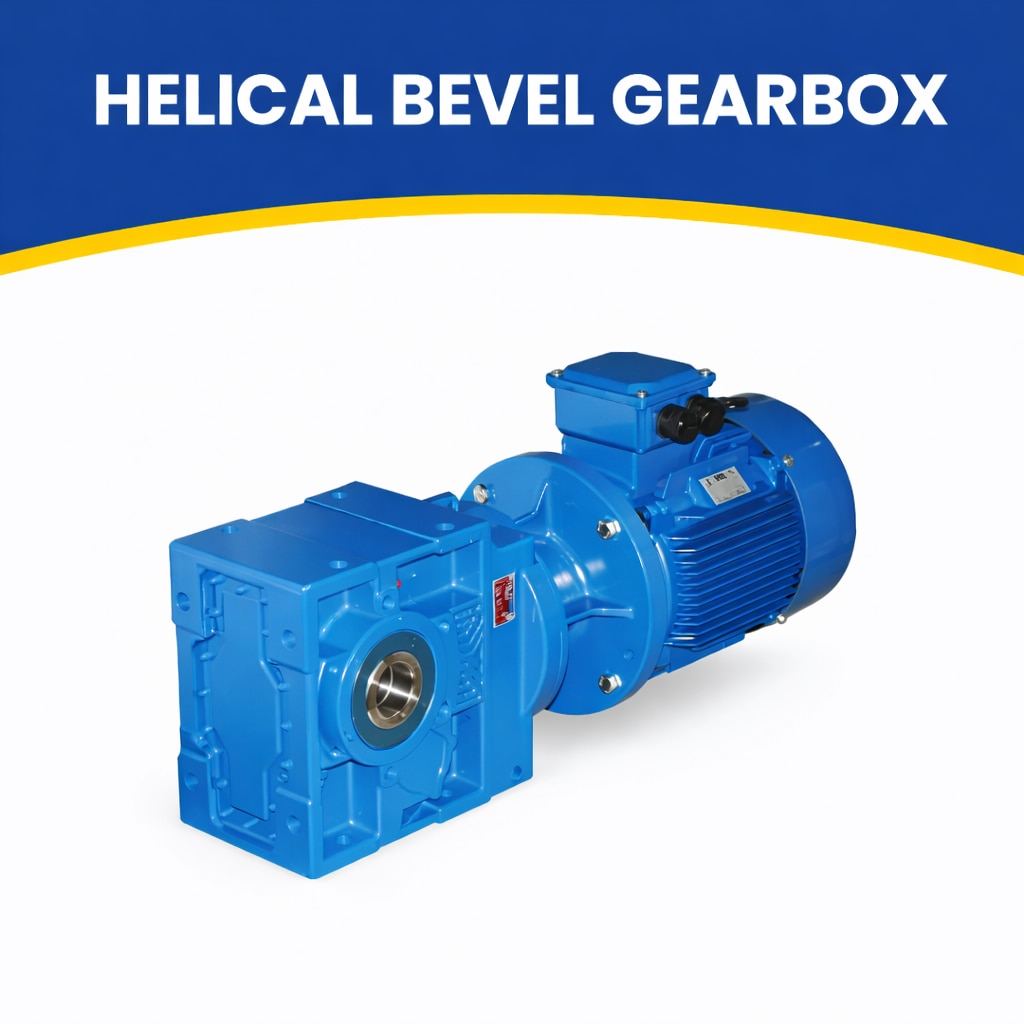 | High-Efficiency Right-Angle Drive Solutions by JRB Engineering Works JRB Engineering Works offers high-performance Helical Bevel Gearboxes designed... View product → |
Keywords