A gearbox quotation cannot be sized reliably from motor horsepower alone: speed, torque, load behaviour, mounting geometry and site conditions all affect the specification. By the end, you will have a practical enquiry checklist, a way to compare technical offers, and the documents needed to verify the gearbox at delivery.
Key takeaways
- Calculate output torque from load, speed and service factor.
- State mounting position, shaft arrangement, duty cycle and ambient conditions.
- Confirm thermal capacity, dimensions and site constraints before ordering.
- Approve drawings, test records and inspection points before dispatch.
What to calculate before requesting a quotation
Motor power alone cannot size a gearbox. Calculate the transmitted load at the gearbox output, then give the manufacturer the speed, duty and mechanical conditions that create it.
1. State motor power in kW or HP, input speed in rpm, required output speed, reduction ratio and rotation direction. Include the calculated output torque in N·m; torque derived from power and speed must match the actual driven load.
2. Describe the duty cycle: operating hours per day, continuous or intermittent running, starts per hour, stopping method, reversing frequency and required service life.
3. Identify the driven machine—conveyor, mixer, pump or feeder—and quantify starting torque, shock loading, driven-machine inertia, braking torque, radial or overhung load and axial load. These values determine the service factor; do not substitute a catalogue factor for your application’s load classification.
4. Provide ambient temperature, altitude, enclosure or ventilation conditions and the required noise limit. These inputs affect thermal rating, lubricant selection and allowable continuous torque.
5. Give mounting position, foot or flange arrangement, right-angle configuration, solid or hollow output shaft, shaft diameter, key dimensions and output orientation. Add any torque arm, shrink disc or backstop requirement.
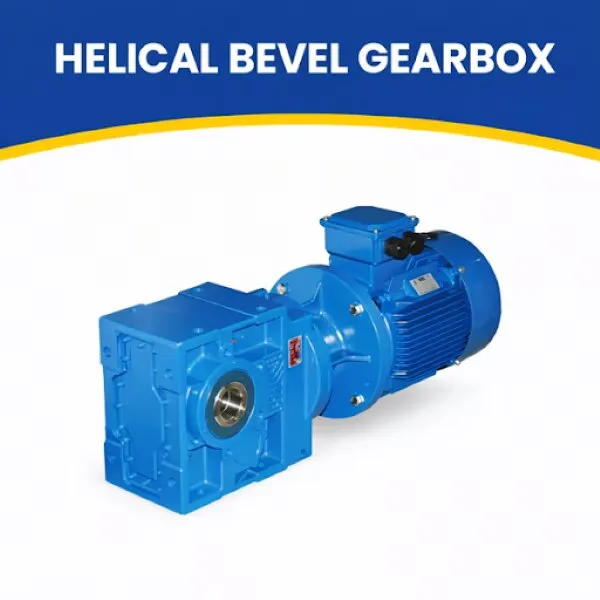
For the helical bevel gearbox ordering process, request the proposed ratio, rated and peak torque, service factor, thermal rating, efficiency basis, noise criterion, mounting drawing and outline dimensions with the quotation. Confirm motor frame, flange, shaft and key dimensions before comparing prices; motor kilowatts do not prove interface compatibility.
How to specify the load and mechanical arrangement
A gearbox can be correctly rated and still arrive unusable if the mounting position, shaft geometry or load type is wrong. Describe the driven machine and its mechanical connection, not only the motor power.
1. Name the machine: conveyor, mixer, pump, feeder or another load. State starting torque, shock loading, reversing frequency, braking, overhung load, radial load and axial load. Include driven-machine inertia when starts or stops are severe.
2. State the operating arrangement: input speed in rpm, required output speed or ratio, direction of rotation, hours per day and duty cycle. Identify whether the output must rotate clockwise, counterclockwise or in either direction.
3. Specify the housing installation: foot or flange mounting, mounting position, and the required right-angle orientation. Give the output shaft orientation relative to the motor and the available mounting-hole pitch.
4. Define the output connection: solid or hollow shaft, shaft diameter, shaft extension and keyway width, depth and length. Add a shrink disc, torque arm, backstop, brake or coupling when the machine needs one.
5. Provide the motor interface separately: frame size, IEC or non-IEC flange, input shaft dimensions, brake, encoder, fan and terminal-box position.
Approve the mounting drawing before manufacture. Check shaft engagement, guard clearance, gearbox envelope, oil-filling access and drain position; a mismatch at any point can force machining, an adapter change or a complete replacement.
How to confirm fit, thermal capacity and site suitability
Confirm the installation before approving the order: a gearbox that fits the torque calculation can still reject the motor, obstruct maintenance access or overheat in service. A helical bevel gearbox for requirements in New Delhi needs site data, not “New Delhi” alone.
1. Match the motor interface against the supplier’s drawing. Check IEC motor frame, flange diameter, mounting-hole pitch, shaft diameter, key size, shaft engagement length and electrical supply. Do not assume equal kilowatt ratings mean compatible dimensions.
2. Check the complete gearbox envelope, including motor, coupling and guards. Mark the mounting position, output-shaft orientation, lifting points, oil-filling access, drain position and clearance for tools. Confirm that the shaft, keyway and mounting holes align with the driven machine.
3. Record the actual environment: indoor or outdoor location, ambient-temperature range, altitude, dust, water exposure, washdown chemicals and available ventilation. Select sealing, paint and corrosion protection from those conditions; a standard seal can fail under chemical washdown.
4. Obtain the thermal rating at your real duty, output speed, starts per hour and ambient temperature. Low output speed, frequent starts and continuous operation reduce heat dissipation even when tooth and shaft strength pass. Confirm whether derating, a fan, oil cooler or added airflow is required.
Require a mounting drawing, thermal calculation and installation-clearance dimensions before comparing quotations. That evidence exposes a poor fit before manufacture, when correction is still inexpensive.
What to demand in the technical quotation and production specification
A comparable quotation must state the gearbox’s actual rating basis, not just motor kilowatts and purchase price. Require the ratio, rated output torque, peak or emergency torque, service factor, thermal rating, efficiency basis, noise criterion, mounting drawing and outline dimensions.
| Quote item | Demand in writing | Why it matters |
|---|---|---|
| Load rating | Input speed, output speed, torque, duty cycle, starts per hour, reversing frequency and design life | Exposes different assumptions behind the same motor size |
| Service factor | Load class, shock level, inertia, operating hours and temperature used in the calculation | A catalogue factor is not a universal safety margin |
| Mechanical fit | Mounting position, foot or flange pattern, shaft type and diameter, key dimensions, orientation, torque arm, shrink disc or backstop | Prevents costly redesign and incompatible accessories |
| Site duty | Ambient range, altitude, dust, water, washdown chemicals and ventilation | Determines seals, cooling and thermal capacity |
Make the helical bevel gearbox production requirements part of the purchase order. Specify gear material and certificate, heat-treatment method and hardness record, tooth-flank quality grade, bearing-fit tolerances, shaft runout, housing alignment, seal installation, lubricant grade and internal cleanliness. Ask for dimensional, runout, backlash, noise and no-load test records, plus calibration certificates for inspection equipment.
A helical bevel gearbox manufacturer in New Delhi, including OPTIGEAR, should identify each deviation from your specification rather than burying it in catalogue language. Reject quotations that provide only a brochure rating.
Related product
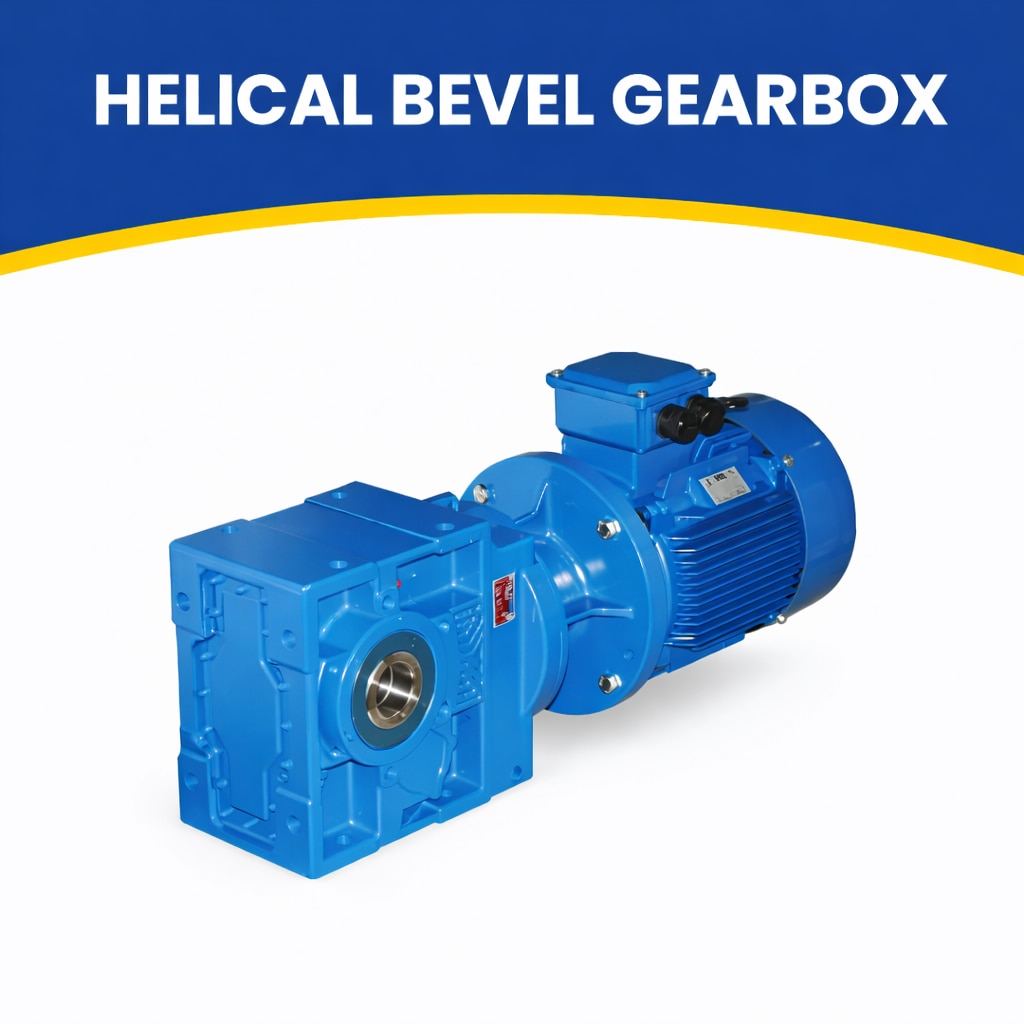 | High-Efficiency Right-Angle Drive Solutions by JRB Engineering Works JRB Engineering Works offers high-performance Helical Bevel Gearboxes designed... View product → |
What to approve, inspect and receive before commissioning
Do not release a gearbox for shipment until the approved general-arrangement drawing matches the purchase order: ratio, mounting position, shaft arrangement, motor interface, dimensions and lifting points. Record revisions so an outdated drawing cannot be used during installation.
| Stage | What to verify | Release evidence |
|---|---|---|
| Design approval | Ratio, mounting, shaft details, envelope, oil access, drain and guard clearance | Signed drawing and revision record |
| Delivery preparation | Storage duration, transport orientation, lifting points and corrosion-protection period | Packing, preservation and dispatch instructions |
| Factory inspection | Ratio or no-load speed, rotation direction, noise, vibration, leakage, nameplate and shaft alignment | Dated test record |
| Handover | Installed ratio, serial number, lubricant, maintenance and warranty details | Complete document pack |
State these delivery conditions in the order. If the unit will be stored for six months, request preservation for that period; otherwise seals, coatings and lifting provisions may not suit the site.
For a critical drive, require dimensional, material, hardness, gear-accuracy and test certificates before dispatch. Do not accept a generic factory certificate when the contract names specific inspections.
Receive the approved drawing, installation and lubrication instructions, lubricant grade and quantity, maintenance intervals, spare-parts list, warranty conditions, test record and dispatch documents. Check the nameplate against the serial number and ordered ratio before mounting.
A catalogue lead time does not control a custom unit: drawing approval, motor or brake data, payment release, special materials and witness inspection can each set the delivery date.
Frequently asked questions
What must you calculate before requesting a helical bevel gearbox quotation?
Calculate output torque from the transmitted load and output speed, then provide motor power, duty cycle, starts per hour, service factor and required ratio.
What mechanical details must you include in a gearbox specification?
State the mounting position, shaft orientation, output shaft type, flange or foot mounting, rotation direction, coupling arrangement, brake details and connected equipment.
How do you confirm a gearbox will fit and operate safely on site?
Check the dimensional drawing, mounting-hole pattern, shaft height, oil-fill and drain access, thermal rating, ambient temperature, enclosure requirements and available installation space.
What should a technical quotation and production specification contain?
Request the gearbox model, ratio, rated torque, service factor, efficiency, materials, lubrication, seals, motor interface, coatings, standards, delivery scope and approved drawing.
What should you inspect before commissioning the gearbox?
Compare the nameplate and delivered model with the approved specification, inspect housing and shafts, verify accessories and documents, check oil and rotation, and follow the alignment and run-in instructions.
Keywords